Aggregates
Aug 14, 2025

Kati Perkola reflects on her career in international export: “Lokotrack® special transports required precise planning”

Kati Perkola spent decades working in export operations for Lokotrack® crushers, where every delivery required precise planning and detailed documentation. She reflects on the early days of her career, the challenges of special transports, and the digital transformation that reshaped office work for good.
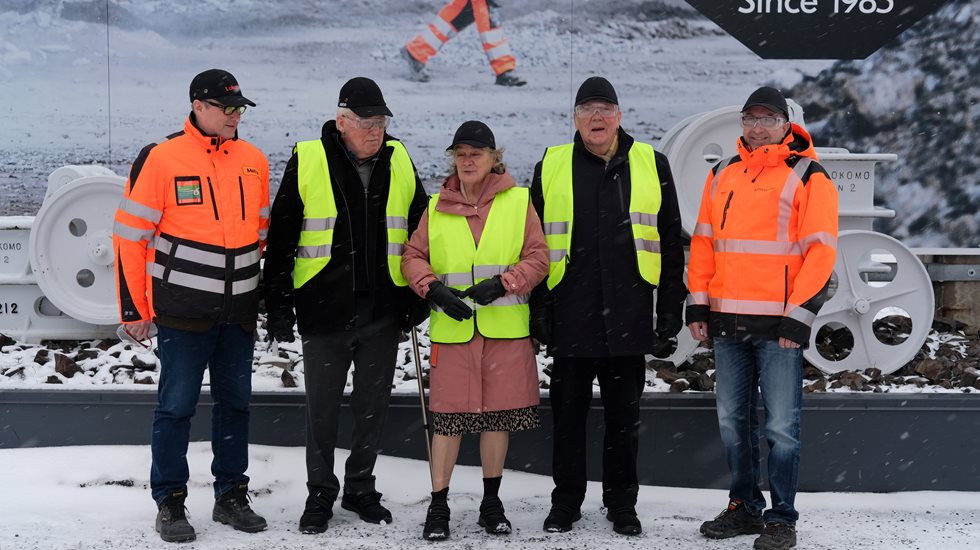
People in front of museum crushers
Kati Perkola (center) in front of museum crushers with Kimmo Anttila (left), Jouko Suominen, Pentti Pietilä, and Marko Salonen.

“All Lokotrack® crushers—each weighing tens of tons and significantly larger than standard base machines—were shipped from Tampere as special transports requiring permits. Careful planning and a thick stack of paperwork were essential before the crusher could safely hit the road on a low-bed trailer,” recalls translator Kati Perkola, who began her career as an export assistant at Lokomo in February 1985the same year Lokotrack® was introduced. 

At the time, the entire export process was managed by a team of three skilled women. Thanks to her strong command of German, Perkola specialized in customers from Central and Southern Europe. Her responsibilities covered everything from quotations and order confirmations to shipping documents, financing, warranties, trade fairs, customer visits, and translation work.
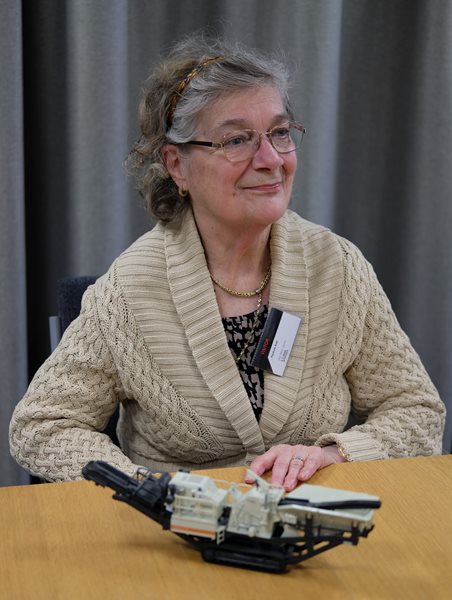
Kati Perkola

The first person to use a computer at the company 

Over her nearly 30-year career, Perkola witnessed the full transition of office work to digital systems. 

“One day, Lokomo’s first computer was placed on my desk. A young man walked into my office holding a floppy disk, asking for my name and whether he could print a file. My colleague warned him: ‘That’s Kati’s computer—you probably shouldn’t touch it without asking.’ That young man turned out to be Olli Vaartimo, the future CEO of the Nordberg Group." 

Even with the help of computers, Perkola’s workdays often extended well beyond the standard eight hours. 

“As a mother of young children living in Kangasala, I used to cycle to work via daycare at 7 a.m. During the summer, big brothers were allowed to pick up their sister from daycare, which helped—since I usually didn’t get home until close to 7 p.m.”

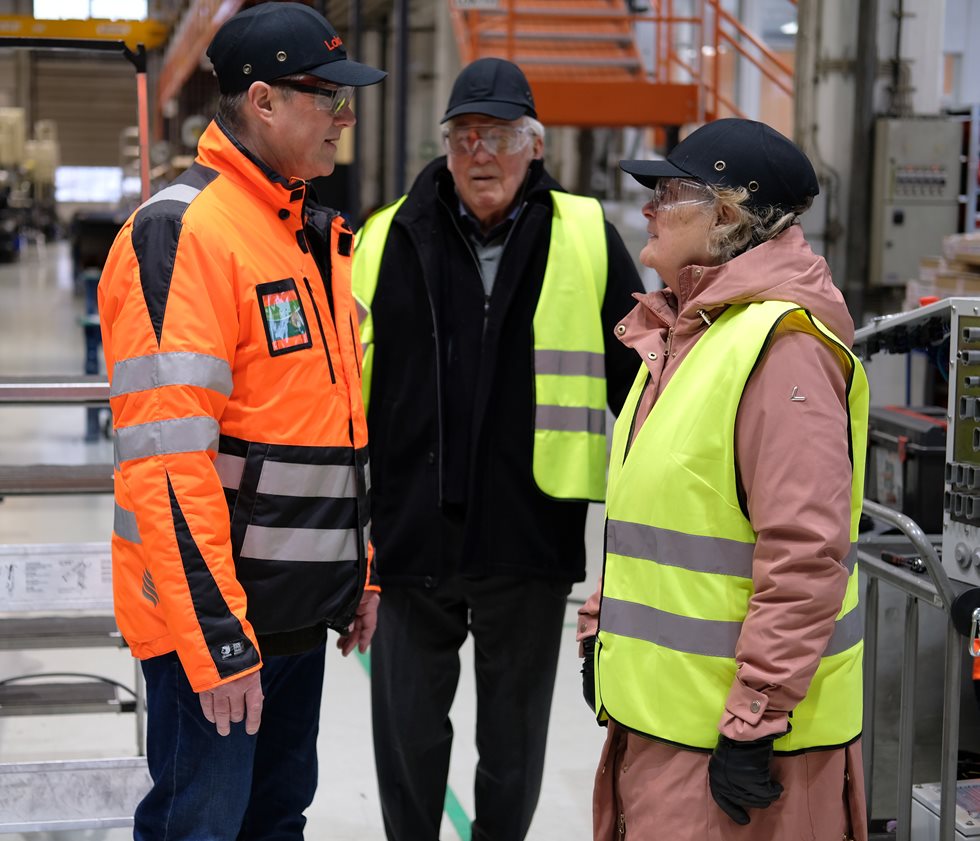
People at Metso factory tour.
During a factory tour, Director Kimmo Anttila (right) shared the latest equipment updates with Kati Perkola and Jouko Suominen.

Surprising moments 

Perkola’s career also included some unexpected moments. 

“One Lokotrack unit had slightly inaccurate drawings, and during transport, the generator cap—positioned at the top—hit the first railway bridge. In Singapore, the machine got stuck on the ramp of a ro-ro vessel, blocking the ship in port.” 

“Lokotrack often traveled under its own power, even on narrow roads. But once, crossing a winding alpine road in Austria proved too much—the unit stopped sideways, blocking traffic in both directions. The design team’s response to the situation was short and to the point: ‘We might need to do something about this,’” Perkola recalls with a smile. 

Check the video
Aggregates