A modular revolution in design
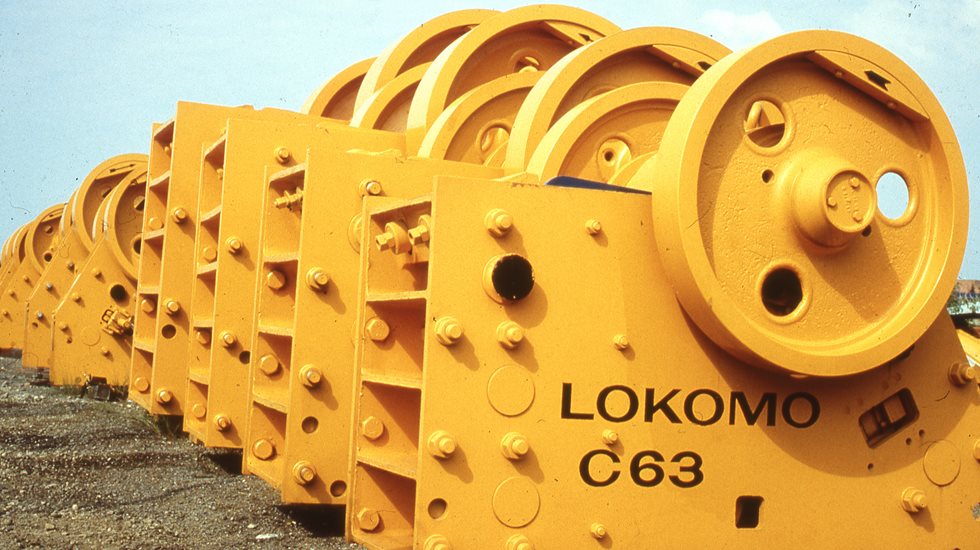
What made the new crushers different was their modular, bolted frame structure. Earlier welded designs had suffered from fatigue resistance issues, but the new approach provided greater strength, reliability, and flexibility. The crushers were also significantly lighter, on average 30% less weight than comparable models, while maintaining performance.
The geometry of the crushing chamber was carefully optimized, using some of the company’s first computer-aided calculations. In fact, in the mid-1970s, Lokomo acquired its first computer, allowing engineers like Lehtonen to develop custom programs for chamber analysis. This leap into digital design made it possible to fine-tune parameters for better efficiency, capacity, and product shape.
By rationalizing machining needs and leveraging the in-house foundry’s expertise in special steel castings, the crushers became not only lighter but also easier to manufacture at scale.
Official launch: the C Series is born
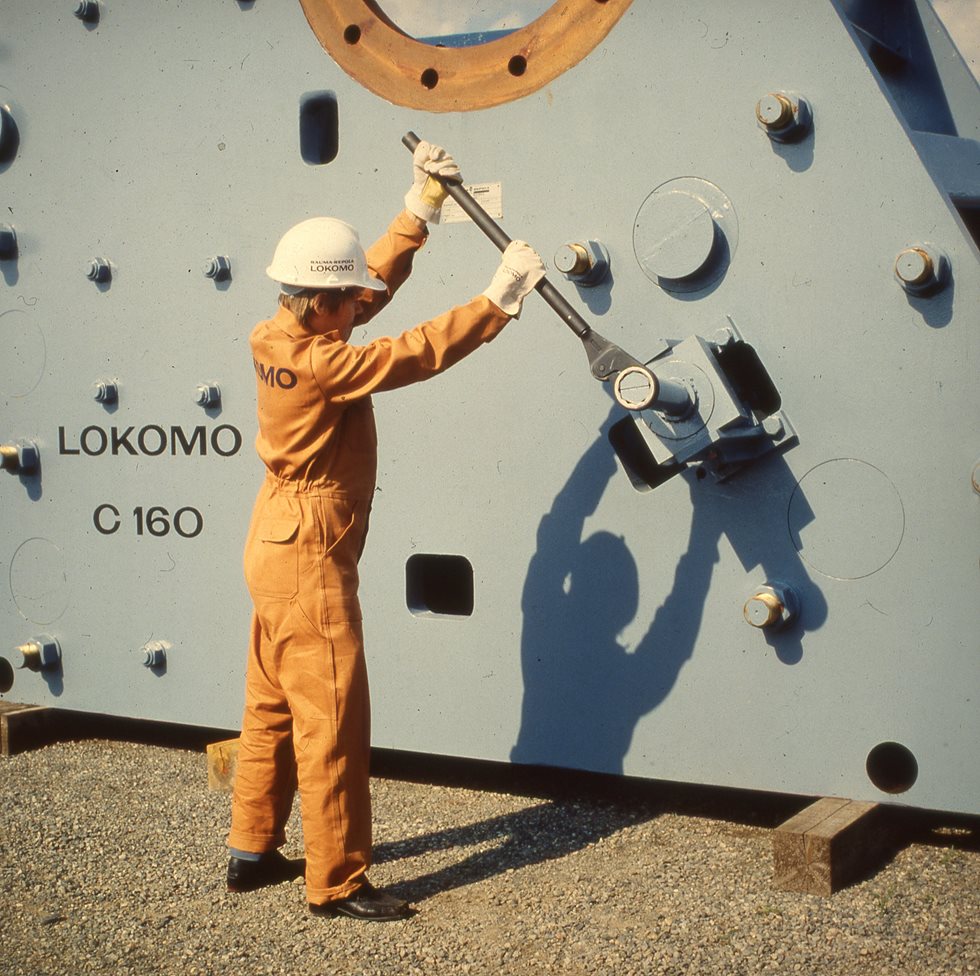
In 1976, after years of prototyping and testing, the new crushers were officially introduced as the C Series. The initial lineup included the C63, C80, CL80, and CL100, with the larger C160 available on request.
These machines were built for efficiency: higher rotational speeds, optimized crushing geometry, and durable wear parts meant better throughput, improved cubicity of the end product, and lower energy consumption. At the same time, maintenance was made simpler. Patented adjustment mechanisms, long-lasting toggle plates, and improved lubrication systems reflected a deep understanding of customer needs.