Aggregates
Aug 29, 2025

Crushing expertise across generations – JK Sorajaloste trusts Lokotrack® crushers

With four generations of crushing experience, JK Sorajaloste Oy relies on Metso’s Lokotrack® to deliver efficient results across Finland. Entrepreneur Jarmo Stenberg shares how diesel-electric technology, automation, and rock expertise support year-round profitability.
Jarmo Stenberg

“Our company has been in crushing operations for four generations. My grandfather Leevi purchased his first Teräskita jaw crusher from Lokomo back in the 1960s. Our collaboration with Lokotrack® began nearly 30 years ago, and today, diesel-electric pre- and secondary crushers serve as tools for the fourth generation,” says Jarmo Stenberg, entrepreneur at JK Sorajaloste Oy. 

At the Valtatie Murske site in Lohja, Finland, Stenberg reflects on the company’s journey while overseeing a 40,000-ton crushing job at the site. The task involves producing five zero-based aggregate grades. In a 15-hour workday, the Lokotrack duo processes approximately 3,000 tons of material—handled by experienced professionals. 

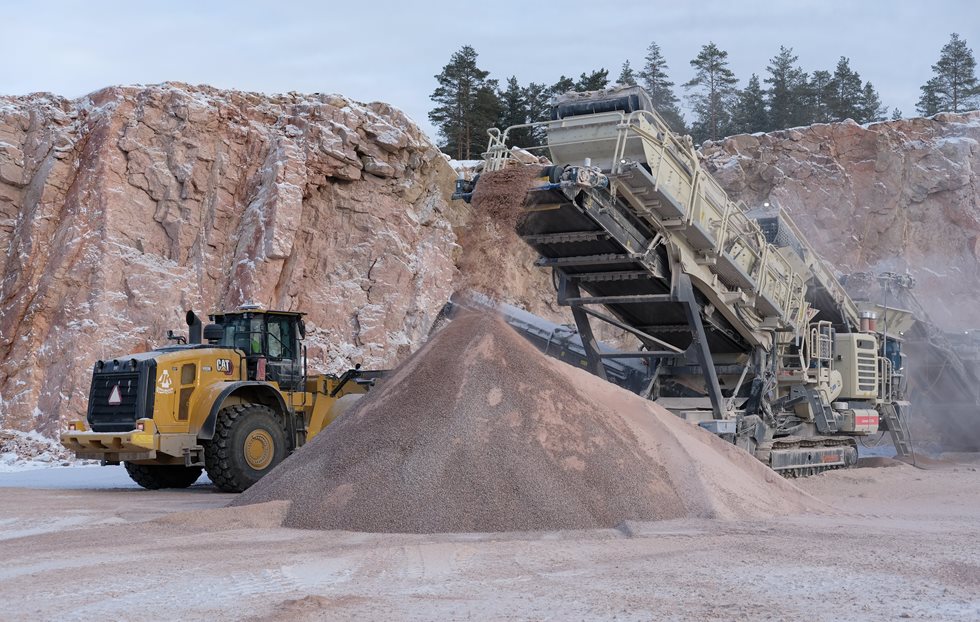
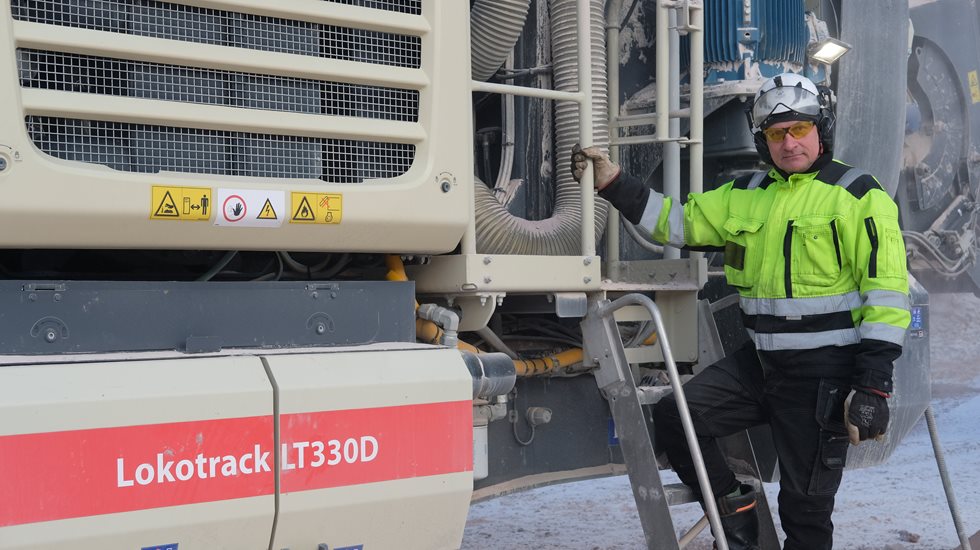
“Our key tools are two nearly identical Metso two-stage units. For primary crushing, we use Lokotrack LT120E jaw crushers, and for secondary crushing, LT330D models that combine a cone crusher and screen on the same chassis,” Stenberg explains. 

Each Lokotrack combination visits 12–14 different sites annually. In addition to Southwest Finland, JK Sorajaloste operates in Uusimaa, Pirkanmaa, and Central Finland.
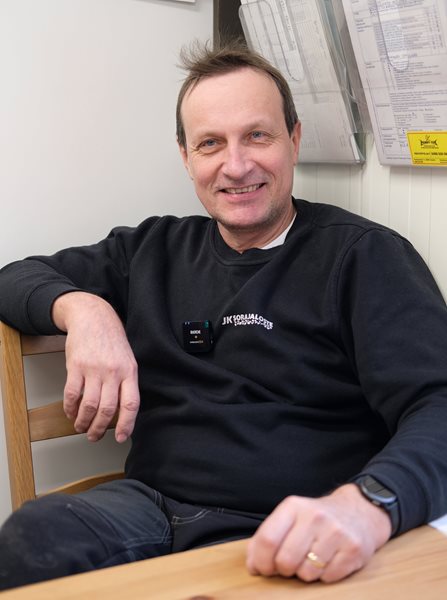
Jarmo Stenberg represents the third generation of the family business.

Diesel-electric efficiency delivers fuel savings 

When asked about the benefits of diesel-electric Lokotrack crushers, Stenberg’s response is clear. 

“Electricity transfers energy more efficiently and economically than hydraulic oil. With electric power, we save 15–20% on fuel costs. The primary crusher runs on 20 liters per hour, and the screen-cone combination runs on 50 liters, whereas a similar hydraulic setup would consume over 100 liters,” he calculates. 

“In crushing operations, such savings are significant—fuel costs are the largest single expense after wages.”

Check the video
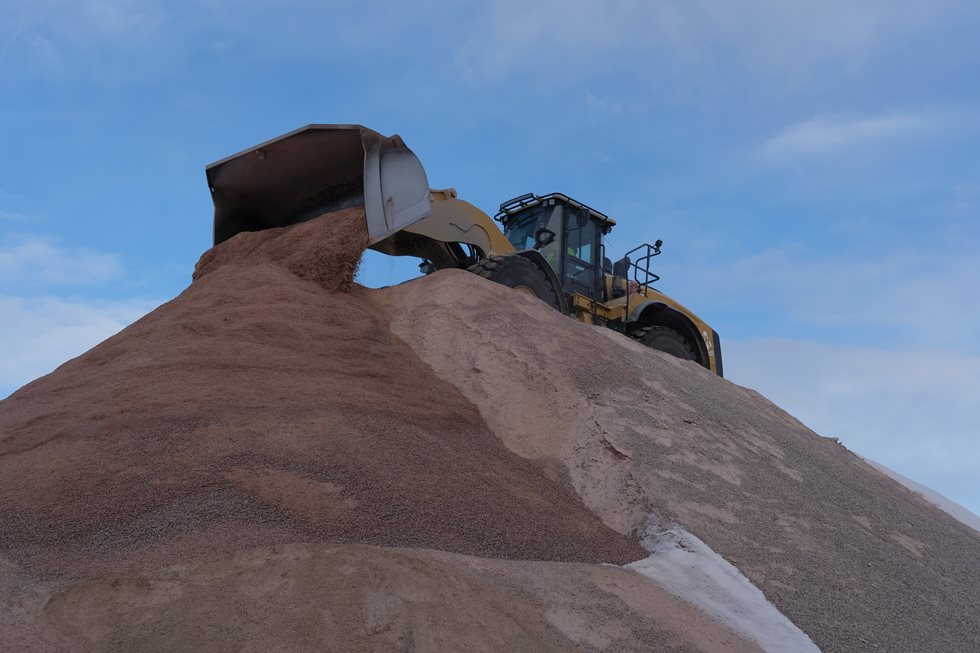
The quarry’s beautiful reddish aggregate is transported from Lohja all the way to Central Finland for landscaping use.

Track-mounted mobility enables fast setup 

In addition to two Lokotrack crusher combinations, JK Sorajaloste Oy also utilizes a wheel-mounted “forest trailer” and a screen. So when are track-mounted crushers the preferred choice? 

“For smaller jobs and two-stage crushing, track-mounted Lokotrack units are unbeatable. They’re easy to move around the site, drive onto a trailer, relocate, and start up. Crushing can begin almost immediately,” Stenberg explains. 

“For example, a 30,000–40,000-ton job is handled efficiently with Lokotrack. After primary crushing, the cone-screen combination produces 3–4 aggregate grades by adjusting the screen meshes to customer specifications.” 

“We use wheel-mounted equipment when producing larger volumes of crushed stone and when the site has sufficient space,” he adds. 

JK Sorajaloste uses two Lokotrack® LT330D™ units for efficient secondary crushing and screening.

Compact power with advanced automation 

JK Sorajaloste’s first Lokotrack was the LT110 jaw crusher acquired in 1998. The newest pair still carries the original Lokotrack name, but Metso’s product development has come a long way. 

“The machines now feature more automation and functions that make work easier. We can adjust the crusher safely from the excavator cabin and monitor key operations remotely. More power has been added without increasing the machine size—which of course involves compromises,” Stenberg reflects. 

“Without a crusher operator, I don’t believe the Lokotrack will be crushing 40 years from now either. One of our biggest challenges is finding skilled young professionals for the industry,” he adds. 

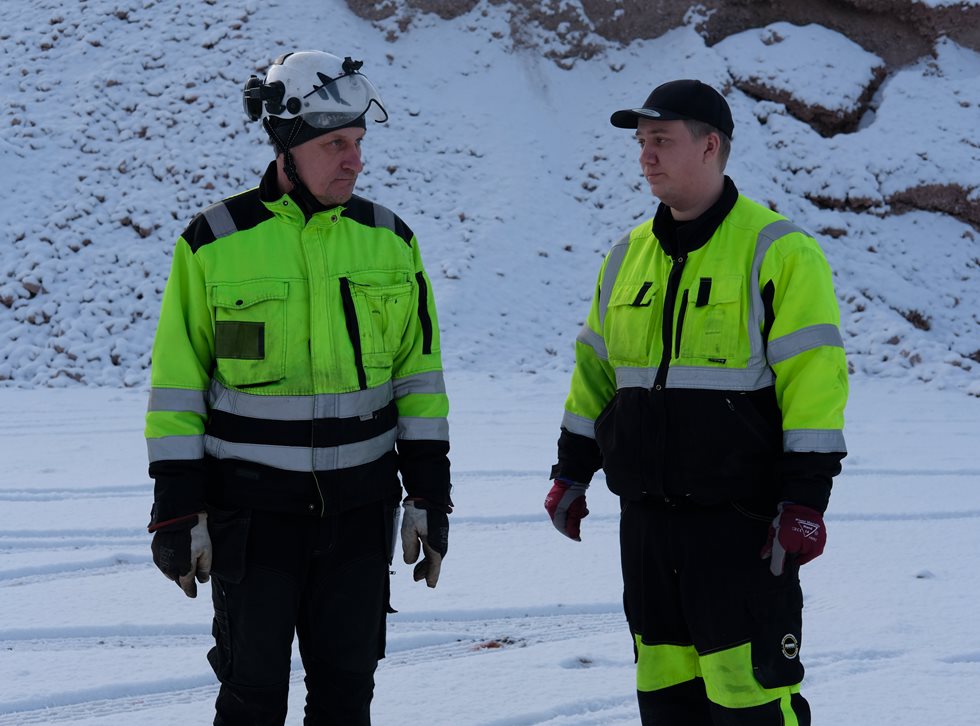
Jarmo Stenberg (left) represents the third generation, and his nephew Petteri the fourth, in the family’s crushing operations.

Rock knowledge is key to profitability 

What’s the secret to profitable crushing operations? 

“You need to have a solid understanding of rock types and how they affect the durability of wear parts. In addition to research data, practical experience is essential. We recently completed a four-month project in Tampere, where the biggest challenge was the combination of low bulk density and high toughness of the rock. If the abrasiveness of the material is misjudged, it can easily eat up the profitability of the entire project,” Stenberg concludes.

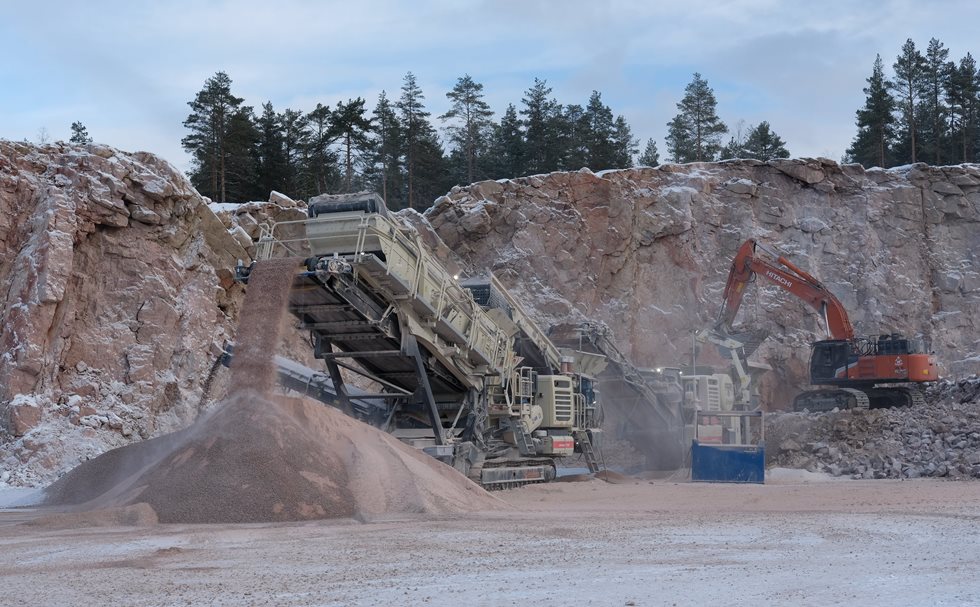
The two-stage plant—Lokotrack® LT120E™ for primary and LT330D™ for secondary crushing and screening—fits even tight job sites.
Aggregates
Your information is safe. Check our privacy notice for more details.
Thank you!
We will shortly contact you. You can send a new inquiry again after 15 minutes.