Mining
Nov 3, 2025

Eagle River mill head replacement: Thinking outside the box

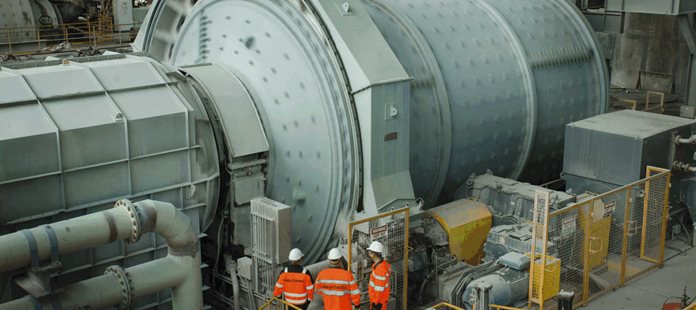
When the Eagle River facility was constructed approximately 30 years ago, the grinding mills and processing equipment were installed first, with the surrounding structure built afterward. This approach resulted in a compact and constrained layout. Despite its size, the concentrator remains highly efficient compared to other operations, utilizing only two horizontal grinding mills.
Hero image

Eagle River is a high-grade gold asset wholly owned by Wesdome Gold Mines Ltd. (TSX: WDO, OTCQX: WDOFF), located on the eastern shore of Lake Superior near Wawa, Ontario – approximately 141 miles (227 km) north of Sault Ste. Marie and 262 miles (421 km) northwest of Sudbury. It is recognized as Canada’s highest reserve grade gold mine and operates a conventional Merrill-Crowe process mill with a permitted capacity of 1,200 tonnes per day.

Space constraints around mineral processing equipment play a critical role in the maintenance, repair, and replacement of machines and components. Long-operating sites like Eagle River often face unique challenges in accessing service areas and handling large replacement parts. However, these constraints also present opportunities for innovation, driving improvements in execution speed and safety during maintenance activities. Successful major component changeouts rely heavily on close collaboration and adaptability between site teams and OEM service personnel.

In 2024, Eagle River commissioned Metso to repair severe wash damage in the throat of a KVS ball mill feed head and trunnion. During the course of the repair, it was determined that a full replacement of the mill head would be necessary.

Due to the critical condition of the machine, the knuckle area was temporarily repaired, and the liner was grouted in place to maintain operability until a permanent replacement could be made. Ultimately, the mill head replacement was scheduled for the planned plant maintenance shutdown in May 2025.

During a typical mill head replacement, the worn component is removed from the mill shell, lifted vertically by a crane, and then positioned horizontally on the ground for removal from the site. The new head is subsequently lifted and aligned for installation on the mill shell. Adequate space and accessibility around the mill are essential to accommodate lifting equipment and to support all related maintenance activities.
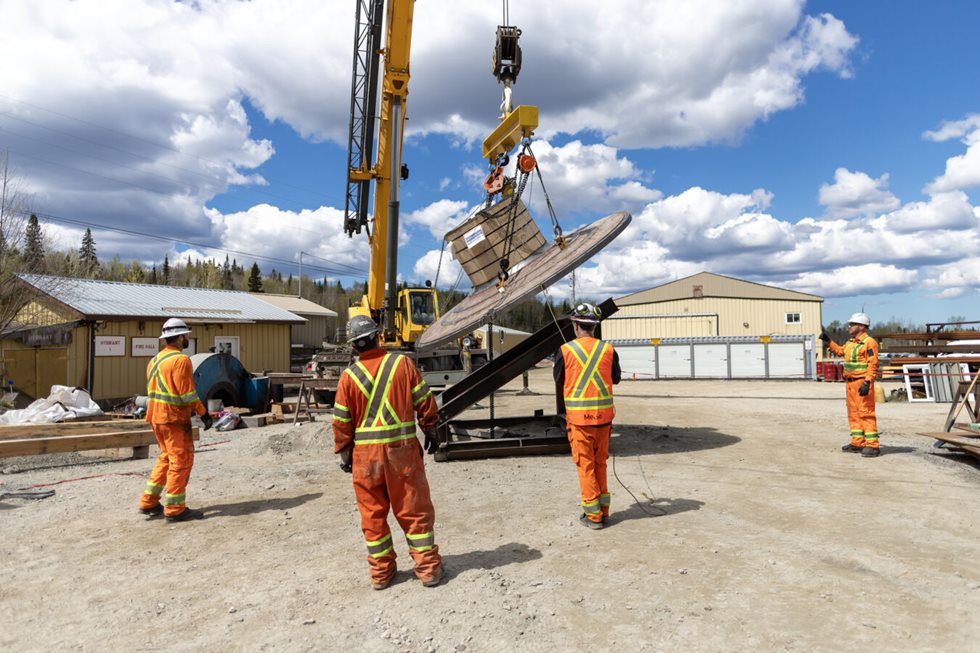
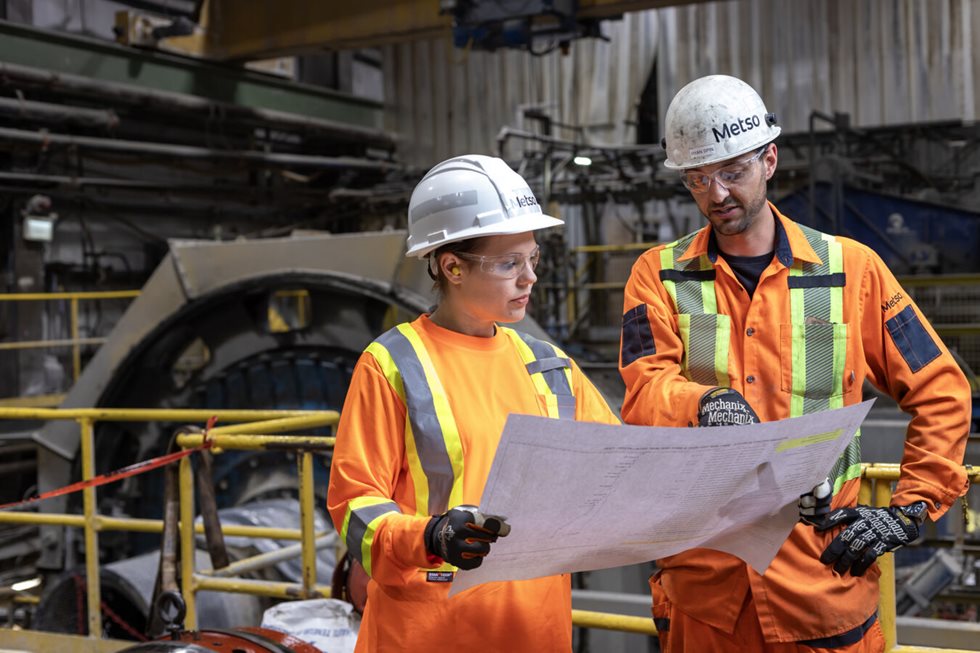
Image 1

A challenging lift in tight quarters

During the project’s planning phase, several challenges emerged related to replacing the large and heavy mill head. The primary mill, measuring 11 by 13 feet, is housed in a facility with only 9 feet of vertical clearance between the crane hook at its highest position and the uppermost structural feature of the plant. This limited headroom made it difficult to lift the 12-foot diameter mill head using conventional replacement methods.

Additionally, the geometry of the mill head did not permit a lifting or picking point to be positioned close enough to its centre of gravity to allow safe and stable handling within the restricted space. The risk of instability while the component was suspended further complicated the procedure.

The mill’s position within the plant also ruled out the option of accessing it from above or removing the roof for crane entry. Compounding the issue, the plant’s main access door – measuring 12 by 12 feet – was too small to safely accommodate the 143-inch diameter mill head when oriented horizontally.

Given these constraints, the project team was required to engineer a custom solution to execute the replacement safely and efficiently.

Image 2

Devising the solution

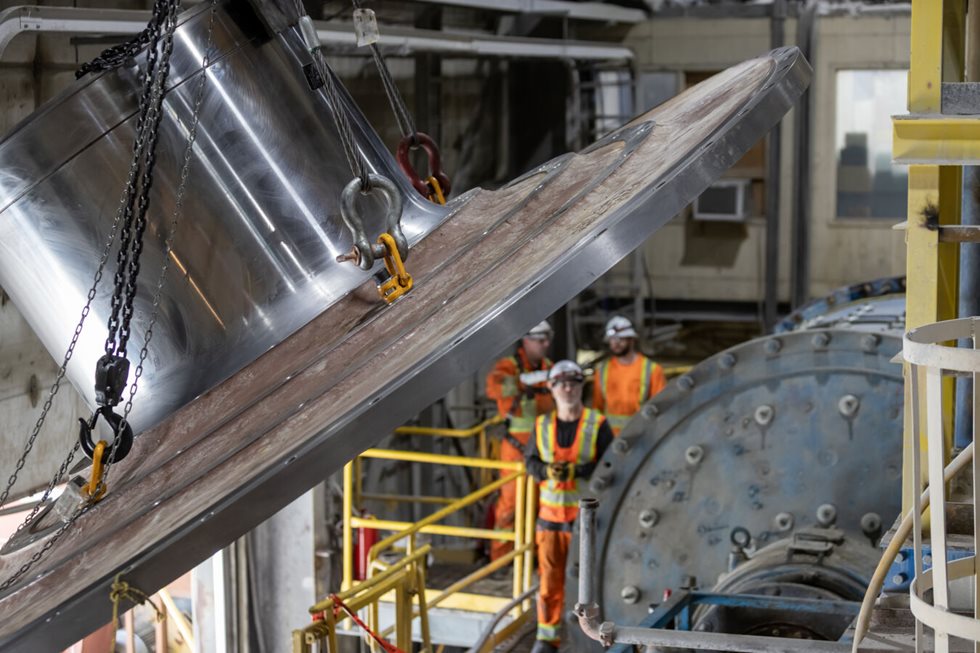
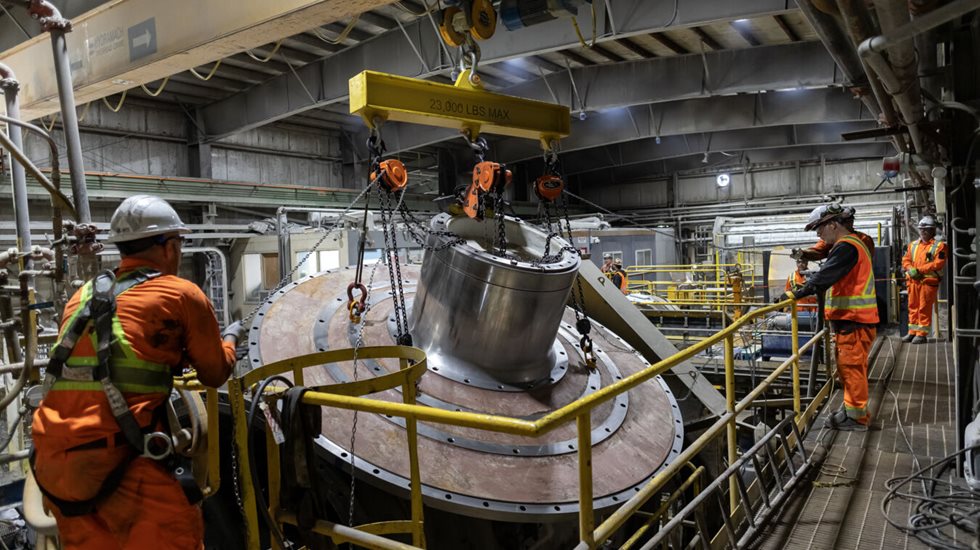
Metso’s professional engineers collaborated closely with the Eagle River team to develop an innovative solution for replacing the mill head within the site’s strict spatial and access limitations. The strategy involved a dynamic lift using a spreader beam and precision rigging, enabling the mill head to be rotated mid-air from a vertical position (for removal and installation) to a horizontal position (for transport and displacement). This approach effectively reduced the mill head’s vertical footprint from 12 feet to 7 feet, allowing it to be maneuvered safely within the 9-foot vertical clearance and avoid overhead obstructions.

To further facilitate movement of both the old and new mill heads through the plant’s 12-foot by 12-foot access door, the team designed a custom sled structure. This support frame held the mill head at a 30-degree angle, reducing its effective horizontal width to 126 inches and providing 18 inches of clearance for safe passage through the doorway.

The sled was constructed on site using welded beams assembled with bolts. The bottom beams were modified to function like skis and fitted with lugs for attaching shackles, allowing the entire assembly to be pulled into and out of the building. All beams, bolts, and weldments were analyzed for bending, shear, compression, and buckling failure to ensure structural safety.

To prevent any risk of mill damage during the head removal, the team also designed and installed internal braces to maintain the shell’s circular integrity in the absence of the mill head. These supports consisted of opposing sliding tube assemblies, welded to curved base plates that matched the internal contour of the shell. The plates were secured in place using existing liner bolt holes.

  • Primary mill dimensions: 11 x 13 feet
  • Mill head diameter: 12 feet / 143 inches
  • Vertical clearance in the plant: 9 feet

Innovation required due to tight space, limited crane hook clearance, and access door limitation.

Image 3

Safe and efficient execution

Given the limited space around the mill, safety remained a top priority throughout the replacement process. With the custom rigging setup and carefully planned lifting technique, the worn mill head was lifted and smoothly rotated to a horizontal position mid-air, minimizing its vertical clearance requirement. The maneuver was executed with precision to avoid any contact with surrounding structures or equipment.

Once rotated, the old head was lowered onto the custom sled and removed from the building. The new head was then placed on the same sled, guided into position, and successfully lifted and installed onto the mill.

During the later planning stages of the project, Wesdome approached Metso with a proposal to replace the gear on the nearby regrind mill in parallel with the primary grinding mill head replacement. Coordinating manpower, tooling, parts, design, and other project requirements typically requires several months of preparation. Demonstrating both flexibility and expertise, Metso’s engineering team successfully developed an execution plan in approximately six weeks and synchronized the gear replacement with the mill head replacement during the scheduled shutdown.

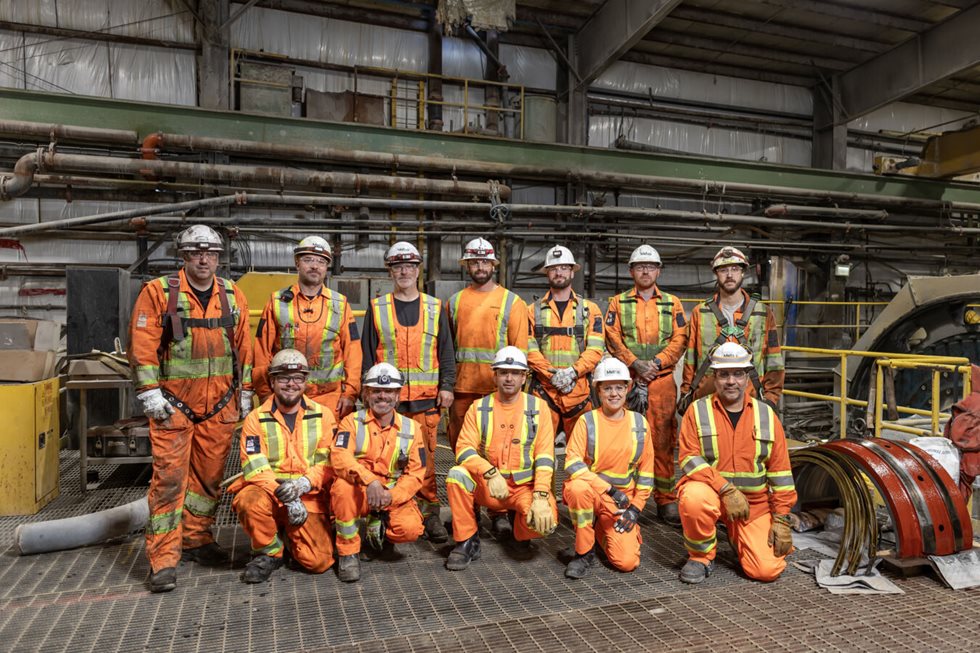
Thanks to strong collaboration between Metso’s engineering and field services teams and the Wesdome site team, both the mill head replacement and the regrind mill gear changeout were safely completed within the established project timeframe.

Image 4

Team insights and collaboration

"The close collaboration between Metso Professional Services and the Wesdome team was an important factor in the work performed. This team effort was instrumental in completing both scopes of work on time and in overcoming the various challenges that come with executing two projects in parallel. Given the tight timelines and the extent of the work performed, a safety-first mindset was key to ensuring the project was completed faster— and with zero injuries," comments Ryan Spin, Metso Field Service Superintendent, emphasizing the importance of teamwork during execution.

The successful completion of this project is a direct result of the professionalism and expertise demonstrated by both the Metso and Wesdome teams.
Darrell Brown, Asset Management & Reliability Manager, Eagle River Mine

"The successful completion of this project is a direct result of the professionalism and expertise demonstrated by both the Metso and Wesdome teams. The work was carried out with the highest commitment to safety and was completed on schedule, despite the considerable challenges posed by the confined workspace during the removal and installation of the mill head. This achievement reflects the strong collaboration and dedication of all involved. Sincere commendations to both teams for delivering this complex task with zero harm," says Darrell Brown, Asset Management & Reliability Manager, Eagle River Mine.

Jenny Dolgova, Senior Project Manager at Metso, shares her perspective on the successful outcome: "The head replacement project was completed faster than planned, and I truly feel the service work was a success due to the way the Wesdome team and Metso personnel interacted and collaborated on all levels—from planning to execution." 

Looking ahead

With a commitment to continuous improvement, Wesdome and Metso are now evaluating future projects aimed at enhancing both maintenance practices and process performance at Eagle River.

Grinding mill services
Helping maximize your grinding productivity
Mining
Your information is safe. Check our privacy notice for more details.
Thank you!
We will shortly contact you. You can send a new inquiry again after 15 minutes.